Wednesday, April 22, 2009

Fashion or Garbage Moguls?

Since today is Earth Day, ABC 7’s Good Morning America did a special report on Living Green and talked about the show “Garbage Moguls” on the National Geographic channel, which offers new ways to look at our trash. This new fashion of being eco friendly and going green has spread and is a good way in which to educate future generations on creativity and repurposing products. The show “Garbage Moguls” follows the employees of the company TerraCycle, who use only garbage and used equipment to run their business. The following link shows a school tour they did but also explains about the innovativeness of the company that has been around since 2001. They are a great example for the compact challenge since we can save money and eliminate our waste from the little we do choose to purchase by repurposing—even encompassing our garbage into our fashion. The compact challenge focuses on changing our consumption habits and this company is trying to reform the habits of America by showing creative ways to repurpose items we deem trash—and they are making a profit.

http://channel.nationalgeographic.com/episode/garbage-moguls-4314/overview#tab-Videos/06558_00

Also, YouTube has a video of “Garbage Moguls” that is related to the future of fashion-repurposing trash into wearable, useful outfits. Check out these two videos as creative ways to start off our compact challenge. We should not consume as much as we do, but for the items we do consume, we should repurpose and reuse them in creative and inventive ways to receive the maximum benefit and make a statement in the process.

The most recent episode of “Garbage Moguls” is on tonight on the National Geographic Channel at 9 PM I believe, but I unfortunately do not have that channel on my cable plan but anyone who does, I encourage you to watch and blog about any new ideas you learn.

Another creative idea from the website: Make a wallet out of a cookie wrapper!


In Fashion-ology, Kawamura explains the origins of fashion as he tells how it began with the "institutionalization of exclusive custom-made clothes known as Haute Couture" and how "the fashion industry is not simply concerned with the production of adequate or pleasant clothing but is concerned with the production of new stylistic innovations that satisfy the image of fashion" (Kawamura 45). All things considered, I believe the reuse of trash such as seen in the making of the poncho by the Garbage Moguls, could be seen as a form of Haute Couture and it is a new stylistic innovation. Whether or not it satisfies the image of fashion can be determined by society as a whole, but at least it is a start in a eco-friendly direction.


Heather Crane


Don't Consume, But when you do be a Garbage Mogul

In Fashion-ology, Kawamura explains the origins of fashion as he tells how it began with the "institutionalization of exclusive custom-made clothes known as Haute Couture" and how "the fashion industry is not simply concerned with the production of adequate or pleasant clothing but is concerned with the production of new stylistic innovations that satisfy the image of fashion" (Kawamura 45). All things considered, I believe the reuse of trash such as seen in the making of the poncho by the Garbage Moguls, could be seen as a form of Haute Couture and it is a new stylistic innovation. Whether or not it satisfies the image of fashion can be determined by society as a whole, but at least it is a start in a eco-friendly direction.

Tuesday, April 21, 2009

Easy or hard?


When this whole compact challenge was introduced in class, i thought it was going to be easy. but i must say not shopping for stuff is going to be hard for me. even though i am a broke college student i just cant help but spend money. i would rather buy something new than something old, that may seem excessive but that's the way that i was raised. my mom didn't like second hand things especially if you can by a new item cheaper online or a few dollars more than a used item. Like in Mai Yamani's article, she stated that "dress suggests where a woman lives, what her status is, and if she is under any kind of circumstance" and so being a second hand shoppper isnt me. even though i haven't shopped or gone to a mall for a long time I'm still shopping. now i do it online, so its even lazier than before. however i do buy items cheaper than at the store. like I'm looking at eBay and amazon a lot more than i used to. i created my eBay account last year so college just made me more economically efficient, in a sense. i remember freshmen year where i bought all my books at the bookstore, and it robbed me. then i found out about uloop.com, and man is that a money saver, and its a great way to sell books, which i highly recommend.

overall this challenge is going to be hard on me. i don't rally like buying second hand things even if it is cheaper. i would rather wait for the item to go on sale or find it cheaper online new than by it used. i don't really know why but that's just how i am. for some reason its just not possible for me to not buy anything when shopping, but i guess i just have to restrain myself for this challenge.


-Jennifer Ma
Mai Yamani article "changing habits of a lifetime"
Uloop.com
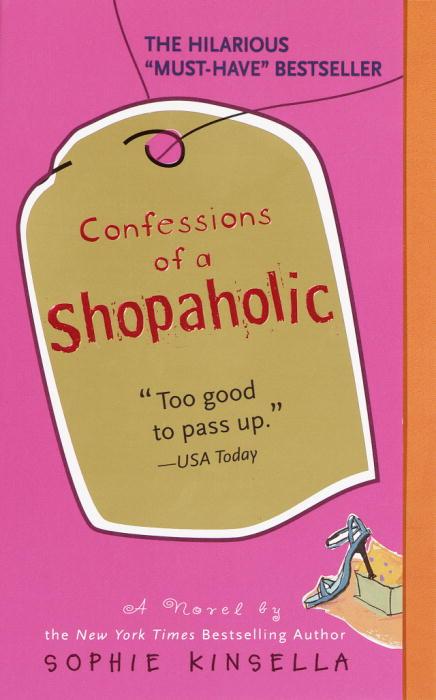
http://www.ehow.com/how_2107996_spot-shopaholic.html?ref=fuel&utm_source=yahoo&utm_medium=ssp&utm_campaign=yssp_art

Monday, April 20, 2009

Repurposing: First New Post for Spring 2009 (sample)

Here we go again. Last year, along with my fashion class students, I participated in the "compact challenge." I learned then that I am a wasteful individual and it was a much welcome lifestyle change that followed. Since then, when I decide I need to purchase something, I first think of craigslist.org or one of the other sites that sell used items. I also stepped up garage sale shopping. These sites and venues even have FREE stuff! Re- programming my mind about consuming reminds me of a million years ago when the Internet began. I had to get into the mindset that for random inquiries, I can google instead of physically going to the library or checking the yellow pages.

Another rethinking process involves how I look at clothes. Before, if something didn't fit right or I was getting tired of it, maybe I'd sell it or give it away. These are still good practices but now I also repurpose my clothes to make new outfits. Like the more creative youth street fashion designers, I began saving clothing items with potential and plan to purchase a sewing machine to rework them into one-of-a-kind pieces (Kawamura 2006). I'm certain this plan will allow me to keep my unique style instead of following trends in a hopeless game of catch up with designs from fashion capitals (Kawamura 2005).

Let's see how my plans work out and what I learn from the compact challenge this year. -Kieu Linh Valverde

http://www.nylonmag.com/?parid=2335&section=article
craigslist.org

Thursday, June 12, 2008

Last Post

I'm glad to be going back to Davis. Although I am going back to the rest of my finals, and yeah...that's not good. At least I get to graduate on Saturday. Hoo-ray for me. It's been a long time in college, and I'm glad to get out of the learning curve for at least a year. Afterwards though, I'm going to be going back to school for a long time.

In getting ready for graduation, I'm going to buy a lot of stuff. 'Nuff Said. I'm going to buy Metal Gear Solid 4 for sure...that I am looking forwrd to. At least I'm kind of over buying new shoes. Anyways, I want to leave this with a poem from David Budbill and his book called Poems of a Mountain Recluse.

What Issa Heard

Two hundred years ago Issa heard the morning birds
singing sutras to this suffering world

I heard them too, this morning, which must mean,

since we will always have a suffering world,
we must also always have a song.

This poem is a pretty good one for me. It's been a really rough week and this kind of made me smile. It shows that I have a lot more suffering to deal with, but there are always things that can chear us up. There are lots of things to look forward to.

In terms of this class, the project was pretty interesting. I don't know if it changed me in any way, but I did eventually see the point of the whole thing, and I can consciously say I thouht about what I bought...or in this case, the lack of what I bought. If anything, I hope that I learn to taper in some of the needless spending that I occasionally do, especially since I am entering the realm of real life. But, real life means real money right? haha. I am interested to see what is to come.

This class was an interesting first try. We had our problems, but it was a chill setting and different opinions were heard. I'm glad that I got to be a part of it and hope that others get to experience a class like this. Not only did I learn about some fashions in haute couture, but I learned to actually attempt to accept the unification efforts in South Korea right now through my research assignment. I'm pretty glad I had to redo the assignment I wanted to do and looked toward cinema to see nationalized movements in the Korea and outside of Korea. I think I learned a good amount.

Best of luck to all, have a good summer, and enjoy the rest of school. I'm done, checked out, and finished. Peace.

-Billy Durham

Japanese Fashion

This is not a good day. I have so much to deal with, and I hate Fresno immensely. It is definately not that great of a city. Too much drama, too much racism, too much crime. Not enough fun, night life, or college activities to do. Still, it was the place of my childhood, and I'll give it that.

I hate it here, but at the mall with my mom, I saw a lot of Harajuku stuff. I know I've talked about it here and there, and that Gwen Stefani was trying to popularize something; but I really wasn't aware of how popular it was. None the less, most of the stuff there was last season. There were tons more from this season, though it didn't seem like it was as much. I wonder if the fad already died off, or is it still going to be practiced for a few more years. I don't see a whole lot of people wearing it, but college is a good place to see all kinds of fashion. While no longer speaking of Harajuku specifically, it's interesting to note the diversity of fashion styles that come out of places and are represented even further away. Alot of early and current Japanese fashions are depicted in our reader in pictures following the Kawamura article on Japanese teens and street fashion.

While the Japanese are known for originality, they took many ideas from Western clothing. Before 1860, Japanese was totally indiginous in dress style, but afterwards they began to incorporate Western ideals for clothing (Kondo 466). While not incorporating all ideals, generalized Western dress permeated the world around. Throughout the 1900's, Japanese fashion utilized Western fashion and hybridized the ideas to make them original.

In the 1980's, Japanese style became popular around the world. Following that period and even currently, Japanese style is becoming increasingly popular and fashionable in all terms from Paris, New York, Tokyo, and even Seoul. Although many designers borrowed some ideas from Western culture, the pieces that Japanese artisans form are distincly Japanese. Because of their style, Japanese designers are sought after and soon, as Dorinne Kondo's article the "Aesthetics and Politics of Japanese Identity in the Fashion Industry," Tokyo will be recognized as a center of fashion, rather than a place of production.

Missing Post

So, I wrote about "Speaking through Cloth: Teaching Hmong History and Culture Through Textile Art" by Ava L McCall. Here is what I remember of it.

I went over to my friend Houva's recently and saw a pretty nice tapestry hung on his wall. As I was asking him about it, he started to tell me the story panel by panel. It was pretty interesting, and it was particularly ineteresting that our reader had an artile about Hmong textile and history. Because of the lack of a written language before the 1950's, the Hmong culture was pased down through oral tradition. In an effort to preserve history, they began sewing detailed tapetries including life moments to tell a story.

Because of the history behing Hmong immigration, many negative perceptions are forced onto the Hmong people. While looking at this tapestry and many others on the internet, the stories of Hmong lifestyle are inspiring and nothing short of amazing. Each panel tells a story, and the color usage is representative of class status as well as feeling. Intricate patterns are sewn into each panel and the artwork involved is amazing. Attention to detail and style of stitch is greatly worked into every aspect of the tapestry. Because of respect, I can't tell the story behind his tapestry, but it was amazing.

The textile art of the Hmong community has recently received much acclaim. In terms of recording history, the textile art is essential as some of the few surviving primary sources behind the Hmong culture. Furthermore, textile art as an artform has received much acclaim throughout the United States as well as in some parts of the world. These tapestries are essential to preserving Hmong history as well as educating the populous about the Hmong culture.