James Kim
For the record, I absolutely love thrifting and I couldn't be more excited to apply the concept of sustainability and "being green" to a classroom setting. I feel as though this challenge is a bit of a continuation of what I've been doing for years, but with the added pressure of abstaining from purchasing anything beyond the periphery of second-hand stores. I have to say, it pains me to let a J. Crew spring sale go like that and I might even shed a little tear. Fortunately for me, I was at Bohéme the other day and found the most beautiful Alexander McQueen blazer for only fifty dollars with a previous price tag of nearly fifteen hundred dollars; so maybe this challenge is somewhat of a blessing in disguise for me? It was almost as if the stars aligned and fate brought us together—to have and to hold, for richer for poorer, in sickness and in health.
But in all seriousness, modern day fashion has taken such a fucked up direction as globalization evolves and the overall demand for clothing at an affordable price increases. Corporations and business conglomerates, like Nike and Forever 21, have taken a Fordist, assembly-line approach to design, perpetuating global consumerism and exploitive practices in the garment industry. As read in Mayer's article, these industries capitalize upon the vulnerability of undocumented immigrant workers and, not only decrease their pay below minimum wage, but also threaten and nearly control the very existences and lives of their exploited employees. In addition, Palmer's article claims that these industries also deter people from even realizing that these workers are exploited under poor and dangerous working conditions, therefore, invisibilizing and propagating these problems and this systematic form of oppression.
As consumers, what we can do to combat this seemingly endless cycle of exploitation is to purchase products from countries that do not practice exploitive methods of human labor and be wary and cautious of where our goods are manufactured. Why not invest your money in quality goods that will last you a lifetime rather than conform to "fast fashion" and consumerism? If we all had this mentality, these issues would cease to exist; but the lack of solidarity and education prevents our community from progressing in a holistic and sustainable demeanor.
I recommend watching this Yale lecture on "Marx's theory of Class and exploitation" as it does a really wonderful job of explaining the Marxist ideology behind capitalism and consumerism that we didn't see in class. It's more interesting than pertinent, but hopefully you learn something from it!
http://www.youtube.com/watch?v=QiPxPHNrIek
Inside Source: Holstein, William J., et al. "Santa's sweatshop." US News & World Report 50 (1996).
Outside Source: Mayer, Robert. "Sweatshops, Exploitation, and Moral Responsibility." JOURNAL of SOCIAL PHILOSOPHY. Vol. 38.No. 4 (Winter 2007): 605–619. Web. 16 Feb. 2014. .
Sunday, February 16, 2014

Thursday, February 13, 2014
Blog #1
by Thavy Duong
In the last few years, I started to cut back on my shopping habits. Sometimes I still go to Target for tights or to HM for $5 sales, but I often get clothes from friends who are getting rid of things, from my parents ( who frequently buy second-hand from flea markets) and from thrift shops and consignment stores. I like to pretend I do it all to be green and fight consumerism, but really, I also do it to save money and sometimes to have "unique" and stylish items that are more prevalent and affordable at thrift stores. For the most part, I think that my actions, however small and individual, make an impact. And that my part is important in collective action. But there are other times when I feel that the problem is so large-- that the systems of oppression engrained in our economic system and social practices are so beyond repair-- that there is no truly ethical way to be a part of contemporary society. Although that sounds bleak, I try my best to navigate within my means to align my actions with my values. But I definitely often feel like a hypocrite. I think that there is a lot more I can do to be more sustainable and ethical in my daily consumption. Aside from avoiding buying new things, I will try to pay more attention to whether other products I buy are ethically produced-- like coffee and chocolate.
I read about a new Canadian company, Local Buttons, that aims to address both environmental and social issues by up-cycling second hand clothes delivered in abundance to Haiti. The company's aims are to bring jobs to Haiti by basing their manufacturing there and reducing clothing waste by recycling clothes. It is interesting though, that they are in a way outsourcing, but with intentions of social justice. After their garments are sewed by locals in Haiti, they are shipped to the US, where they are sold in pop-up shops and an online boutique. I find it interesting that the founders mention that they would have loved to be able to be based in the NYC garment industry, but it wasn't logistically possible because, "Who would sew?" So I'm wondering whether they, like larger transnational companies, feel like it's impossible to be based in the US and stay within a desired price-point, or if they feel it is preferable to go abroad for humanitarian reasons to that they bring jobs to a third world country.
Local Buttons Interview
One of the articles for class, called "Santa's Sweatshop," helped me to understand the process of subcontracting, which many large scale clothing companies make use of in order to maximize profits. What many US companies do is subcontract labor to another country. The company is then able to absolve accountability for unethical labor practices by claiming they were not aware or in control of the labor supplied by abroad subcontractors. Although they profit heavily from subcontractors' exploitation of laborers, they do not take responsibility for it. I see this pattern of subcontracting a lot-- in clothing manufacturing and in other consumer goods. Although it seems obvious to me that companies know very well that they benefit from labor exploitation, laws continue to favor transnational corporations. Although the article ended on a positive note by featuring a list of ways consumers can make an impact (by researching companies' labor practices before buying and by only buying from ethical companies), the problem won't really be resolved without changes in government policy so that laws don't favor corporate interests over human rights. In the film we watched in class about the Forever 21 boycott, the judge initially threw out the case because Forever 21 was not held legally accountable for profiting from exploitative subcontracting.
On page 8 of "Santa's Sweatshop", the paragraph starting with, "What makes the issue so staggeringly complex is that the current system of global sourcing isn't all bad," leaves me a bit taken aback. The authors go on to explain, "today's Third World Nation can be tomorrow's success story. Take South Korea. A decade or so ago, Nike had most of its sneakers manufactured there; now South Korea has evolved into an industrial powerhouse with a higher living standard, and Nike makes most of its shoes in Indonesia and China." (Holstein et al 8) I agree that the issue is very complicated. However, I find their rationale problematic because it seems to implicitly support exploitative labor hierarchies by saying that it could all be worth it some day if those countries become "developed" capitalistically. I guess the ends justify the means? I find their neoliberal lens unsurprising, but frustrating for me, because I see the current set-up as systematically flawed.
In a journal article, entitled "The New Feudalism: Globalization, the Market, and the Great Chain of Consumption," the author describes how free market ideology boasts itself as the ultimate form of egalitarian democracy. It argues, though, that the free market is undemocratic in nature because the vast majority of power and wealth remain in the hands of the few (corporations). And we as citizens accept our oppression because we have a culture that fosters good faith that the free market will take care of everything if left undisturbed (by government intervention). The article argues that free marketology (or neoliberalism) is a regression to styles of Feudal governance, in which wealth is in the hands of the few royal. I think it's an interesting take on our current situation and foreshadows an inevitable growth in wealth disparities if nothing changes.
Works Cited
Duvall. (2003). The New Feudalism: Globalization, the Market, and the Great Chain of
Consumption. New Political Science, 25(1), 81-97.
doi: 10.1080/0739314032000071244.
http://dx.doi.org/10.1080/0739314032000071244.
Holstein, Palmer, Ur-Rehman and Ito. "Santa's Sweatshop: In a GLobal Economy, It's
Hard to Know Who Made Your Gift-- And Under What Conditions." Reader.
In the last few years, I started to cut back on my shopping habits. Sometimes I still go to Target for tights or to HM for $5 sales, but I often get clothes from friends who are getting rid of things, from my parents ( who frequently buy second-hand from flea markets) and from thrift shops and consignment stores. I like to pretend I do it all to be green and fight consumerism, but really, I also do it to save money and sometimes to have "unique" and stylish items that are more prevalent and affordable at thrift stores. For the most part, I think that my actions, however small and individual, make an impact. And that my part is important in collective action. But there are other times when I feel that the problem is so large-- that the systems of oppression engrained in our economic system and social practices are so beyond repair-- that there is no truly ethical way to be a part of contemporary society. Although that sounds bleak, I try my best to navigate within my means to align my actions with my values. But I definitely often feel like a hypocrite. I think that there is a lot more I can do to be more sustainable and ethical in my daily consumption. Aside from avoiding buying new things, I will try to pay more attention to whether other products I buy are ethically produced-- like coffee and chocolate.
I read about a new Canadian company, Local Buttons, that aims to address both environmental and social issues by up-cycling second hand clothes delivered in abundance to Haiti. The company's aims are to bring jobs to Haiti by basing their manufacturing there and reducing clothing waste by recycling clothes. It is interesting though, that they are in a way outsourcing, but with intentions of social justice. After their garments are sewed by locals in Haiti, they are shipped to the US, where they are sold in pop-up shops and an online boutique. I find it interesting that the founders mention that they would have loved to be able to be based in the NYC garment industry, but it wasn't logistically possible because, "Who would sew?" So I'm wondering whether they, like larger transnational companies, feel like it's impossible to be based in the US and stay within a desired price-point, or if they feel it is preferable to go abroad for humanitarian reasons to that they bring jobs to a third world country.
Local Buttons Interview
One of the articles for class, called "Santa's Sweatshop," helped me to understand the process of subcontracting, which many large scale clothing companies make use of in order to maximize profits. What many US companies do is subcontract labor to another country. The company is then able to absolve accountability for unethical labor practices by claiming they were not aware or in control of the labor supplied by abroad subcontractors. Although they profit heavily from subcontractors' exploitation of laborers, they do not take responsibility for it. I see this pattern of subcontracting a lot-- in clothing manufacturing and in other consumer goods. Although it seems obvious to me that companies know very well that they benefit from labor exploitation, laws continue to favor transnational corporations. Although the article ended on a positive note by featuring a list of ways consumers can make an impact (by researching companies' labor practices before buying and by only buying from ethical companies), the problem won't really be resolved without changes in government policy so that laws don't favor corporate interests over human rights. In the film we watched in class about the Forever 21 boycott, the judge initially threw out the case because Forever 21 was not held legally accountable for profiting from exploitative subcontracting.
On page 8 of "Santa's Sweatshop", the paragraph starting with, "What makes the issue so staggeringly complex is that the current system of global sourcing isn't all bad," leaves me a bit taken aback. The authors go on to explain, "today's Third World Nation can be tomorrow's success story. Take South Korea. A decade or so ago, Nike had most of its sneakers manufactured there; now South Korea has evolved into an industrial powerhouse with a higher living standard, and Nike makes most of its shoes in Indonesia and China." (Holstein et al 8) I agree that the issue is very complicated. However, I find their rationale problematic because it seems to implicitly support exploitative labor hierarchies by saying that it could all be worth it some day if those countries become "developed" capitalistically. I guess the ends justify the means? I find their neoliberal lens unsurprising, but frustrating for me, because I see the current set-up as systematically flawed.
In a journal article, entitled "The New Feudalism: Globalization, the Market, and the Great Chain of Consumption," the author describes how free market ideology boasts itself as the ultimate form of egalitarian democracy. It argues, though, that the free market is undemocratic in nature because the vast majority of power and wealth remain in the hands of the few (corporations). And we as citizens accept our oppression because we have a culture that fosters good faith that the free market will take care of everything if left undisturbed (by government intervention). The article argues that free marketology (or neoliberalism) is a regression to styles of Feudal governance, in which wealth is in the hands of the few royal. I think it's an interesting take on our current situation and foreshadows an inevitable growth in wealth disparities if nothing changes.
Works Cited
Duvall. (2003). The New Feudalism: Globalization, the Market, and the Great Chain of
Consumption. New Political Science, 25(1), 81-97.
doi: 10.1080/0739314032000071244.
http://dx.doi.org/10.1080/0739314032000071244.
Holstein, Palmer, Ur-Rehman and Ito. "Santa's Sweatshop: In a GLobal Economy, It's
Hard to Know Who Made Your Gift-- And Under What Conditions." Reader.
Wednesday, February 12, 2014
Blog #1
Timmy Huynh
Our professor asked us to participate in a anti-consumer culture, pro-green movement for the next four weeks. The purpose of this challenge is to see how long we can go without purchasing new items, learn to use our community and become smart consumers.
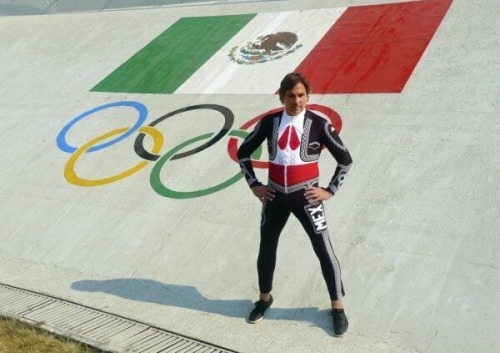
In the book Fashion-ology, Kawamura states that cultures use fashion as a symbolic strategy to communicate, consume and create an image or symbol for themselves (94). Yeah I can see how this is true. In lecture Professor Valverde mention national aesthetics and how it is used to strategically organize and branded to create a ideology or image. Countries do this too. In the 2014 Sochi Olympics, Prince Hubertus of Hohenlohe-Langenburg skies in a Mariachi-style ski suit for the country he was born in. Although he won't medal this year, his background story is inspiring. According to Latin Times, He founded the Mexican Ski Federation at the age of 21. I love the design of his uniform. It is both stylish and functional at the same time. What do y’all think? Yay or nay? Is this "fashion propaganda?"
Inside source: Kawamura, Y. Fashion-ology: An Introduction to Fashion Studies. "Consumption and Social Status."
Outside source: Longo, Donovan . "When Does Hubertus Von Hohenlohe Compete In Sochi? Find Out When To See Olympic Mexican Skier Go For Gold In Mariachi Suit." Latin Times. N.p., 11 Feb. 2014. Web. 12 Feb. 2014..
Our professor asked us to participate in a anti-consumer culture, pro-green movement for the next four weeks. The purpose of this challenge is to see how long we can go without purchasing new items, learn to use our community and become smart consumers.
In the book Fashion-ology, Kawamura states that cultures use fashion as a symbolic strategy to communicate, consume and create an image or symbol for themselves (94). Yeah I can see how this is true. In lecture Professor Valverde mention national aesthetics and how it is used to strategically organize and branded to create a ideology or image. Countries do this too. In the 2014 Sochi Olympics, Prince Hubertus of Hohenlohe-Langenburg skies in a Mariachi-style ski suit for the country he was born in. Although he won't medal this year, his background story is inspiring. According to Latin Times, He founded the Mexican Ski Federation at the age of 21. I love the design of his uniform. It is both stylish and functional at the same time. What do y’all think? Yay or nay? Is this "fashion propaganda?"
Inside source: Kawamura, Y. Fashion-ology: An Introduction to Fashion Studies. "Consumption and Social Status."
Outside source: Longo, Donovan . "When Does Hubertus Von Hohenlohe Compete In Sochi? Find Out When To See Olympic Mexican Skier Go For Gold In Mariachi Suit." Latin Times. N.p., 11 Feb. 2014. Web. 12 Feb. 2014.
Tuesday, February 11, 2014
Blog #1
Camilla Yuan
So the next seven days marks the first week of the "Be Green Challenge." In this movement, the goal is to not purchase anything "new" from a store or website and if we do, then we would have to either buy it second-hand or borrow it from a friend, the exceptions would be any kind of necessity. The challenge is to see how long we can last without purchasing an item that has not been used. Through restraining our spending, we can create an awareness of how much we are spending and the consequences of consumerism.
So the next seven days marks the first week of the "Be Green Challenge." In this movement, the goal is to not purchase anything "new" from a store or website and if we do, then we would have to either buy it second-hand or borrow it from a friend, the exceptions would be any kind of necessity. The challenge is to see how long we can last without purchasing an item that has not been used. Through restraining our spending, we can create an awareness of how much we are spending and the consequences of consumerism.
In our society, consumerism has a become a norm. People are always purchasing items left-and-right, satisfying whatever needs they have with objects that they think they need. We often assume that brands are the means to acceptance in social groups, "whether their power is in high-end brands like Mercedes that provide entry into the elite, or low-priced options like Target and Ikea that uplift the populace with a sense of style" (Praet 48). It is basically human nature to have a desire to want to purchase something that is new, trendy, and fashionable. From a different angle, Palmer's article discusses consumerism from the perspective of the controversial labor that is put behind a product. Many consumerists fail to recognize the poor conditions of the laborers that actually make the final product because of our privileged society. Palmer also brings up the point that "what may appear to be horrific working environments to most citizens in the world's richest nation are not just acceptable but actually attractive to others who live overseas or even in 'Third World pockets' of the United States" (1). The perspective that underprivileged individuals do find horrible working conditions attractive demonstrates how dysfunction our society can be. However, with eye-opening articles, such as this one, and campaigns that bring awareness to our consumerist ways, we can combat the injustices that we indirectly put in.
I think that this challenge will not be too difficult for me. Because I know how much of a budget-crunching type situation that I am in, I try to not buy anything I do not really need. However, if something still catches my eye after a good week or two of wondering whether I should get it, then I would probably take the plunge and buy it. And plus, I do not really have the time to go shopping, or even online shopping--I am too busy with school, rowing, and work. Usually the only time that I do splurge on clothing is when I am at home for the breaks and my dad agrees to pay for things :) Although I think this challenge will be easy for me, I can also use this opportunity to gain an awareness of our spending habits, the world of consumerism, and how consumerism can cause social and environmental stresses.

Inside Source: Holstein, William J., et al. "Santa's sweatshop." US News & World Report 50 (1996).
Outside Source: Van Praet, Douglas. Unconscious Branding: How Neuroscience Can Empower (And Inspire) Marketing. New York: Palgrave Macmillan, 2012. Print.
Blog #1 by Yee Xiong
In a world that thrives on capitalism, it is important to remember the drawbacks from high-end designs. Even the computer that I own came somewhere from the other side of the world by sweatshop laborers I will probably never get to meet in my lifetime. I became environmentally conscious a few years ago when I took a on a class project that dealt with the science and energy behind high end products such as Nike. After heavy research, my conscious became extremely guilty for every brand name product I ever purchased. I realized that high end products was the result of blood, sweat, and tears of workers trying to earn a few cents a day. Ever since this (rather late) realization, I became more conscious about what I bought and where I purchased my needs and wants. Brand names are what sell, and not quality items anymore; however, people can be loyal customers to brand names and this can be a political stance toward consumerism.
Going on this "challenge" to be green is not much of a challenge for me since I have started before today. The last time I shopped was last summer when I was in London. However, I will continue on this journey to not participate in consuming items that are not a necessity or vital to my health. In Korzeniewicz's article, “Global Commodity Networks and the Leather Footwear Industry: Emerging Forms of Economic Organization in a Postmodern World”, he illustrates the local to international networks and how it works to help generate global commodity markets.
To raise awareness about consumerism and to also challenge others to go green, here is an interesting and fun fact about how much water it takes to make every day items: http://www.youtube.com/watch?v=ljmo1i0Tjz0
Sources: http://depts.washington.edu/ccce/assets/documents/pdf/NewBrandedPoliticalCommunication(BennettChapterFinal)61002.pdf
http://www.casadosaber.com.br/sabermais/2657/Artigo_aula02.pdf
Blog #1
Barbara Peanh
Starting today, I will be participating in the "Be Green, Anti-Consumerism Campaign." The movement encourages people to buy less of their "wants" and really focus on our true needs and necessities in order to rid our lives of excess and hoarding. However if we do buy things, we should do so by re-using, recycling, and purchasing items that are second handed. The movement in itself is a great way for people to break out of the unconscious socialization we are all partaking in while living in this consumerist world filled with great marketing techniques, advertisements, and material goods we believe we need. For example, in "Fashion-ology," Yuniya Kawamura talks about Veblen's study of conspicuous consumption and how people acquire goods to compete with each other as social symbols of status and social position. Therefore, we buy things more so to assume an identity we want to be perceived as by using things to impress those we don't care about and are stuck in a devilish cycle of consuming.
This will be an amazing opportunity for me to personally challenge myself and my horrible consumer habits. I acknowledge that I am a terrible consumer because I know I shouldn't buy "things", but it's an addiction that for the most part that I cannot help, or at least have not tried to relinquish. My addiction most definitely started when I first started working after high school in retail at Gap, thus constantly being surrounded by clothes. Also, being the youngest of five, I grew up always wearing my older sisters' out of date, hand-me down clothing. Once I started working, I gained a new sense of power by having my own paycheck and my own money to spend which resulted in me going haywire and buying whatever it is that I want.
However, by participating in this movement for the next four weeks I will learn to fight consumerism by being an "ethical consumer, green consumer, and the activist consumer" (Sands, The Conversation). These three groups of consumers are necessary for consumer resistance with retail and assume the role of a citizen, activist, or rebel according to Sean Sands, a researcher for Retail Studies. These groups are also supportive and political of social movements against corporate dominance. By being an ethical consumer, I will think constantly about my purchases, or lack of them to remind myself that I do have enough. I will also make the conscious effort to stop stalking retail websites for the sake of browsing and being bored, because I tend to cave when I find something striking, or a striking price. I will be a green consumer by re-using or recycling my items, but most of all, I will save money. I will be an activist consumer by not supporting companies and organizations that have poor working conditions and no rights for their laborious garment workers.
Inside source: Kawamura, Y. Fashion-ology: An Introduction to Fashion Studies. "Consumption and Social Status." Pages 95-98.
Outside source: Sands, S. "The Anti Shopping Movement Goes Mainstream." The Conversation. Retrieved from http://theconversation.com/the-anti-shopping-movement-goes-mainstream-4804

Welcome to the chaos I call a closet. This is one side of my closet, with sweaters and shirts folded on a rack under those blouses, two big bags filled with shoes in the hidden corner.. a 4 drawers that I cannot close, and a door full of scarves and jackets which are missing in action.
This "Be Green" challenge is necessary for me.
Starting today, I will be participating in the "Be Green, Anti-Consumerism Campaign." The movement encourages people to buy less of their "wants" and really focus on our true needs and necessities in order to rid our lives of excess and hoarding. However if we do buy things, we should do so by re-using, recycling, and purchasing items that are second handed. The movement in itself is a great way for people to break out of the unconscious socialization we are all partaking in while living in this consumerist world filled with great marketing techniques, advertisements, and material goods we believe we need. For example, in "Fashion-ology," Yuniya Kawamura talks about Veblen's study of conspicuous consumption and how people acquire goods to compete with each other as social symbols of status and social position. Therefore, we buy things more so to assume an identity we want to be perceived as by using things to impress those we don't care about and are stuck in a devilish cycle of consuming.
This will be an amazing opportunity for me to personally challenge myself and my horrible consumer habits. I acknowledge that I am a terrible consumer because I know I shouldn't buy "things", but it's an addiction that for the most part that I cannot help, or at least have not tried to relinquish. My addiction most definitely started when I first started working after high school in retail at Gap, thus constantly being surrounded by clothes. Also, being the youngest of five, I grew up always wearing my older sisters' out of date, hand-me down clothing. Once I started working, I gained a new sense of power by having my own paycheck and my own money to spend which resulted in me going haywire and buying whatever it is that I want.
However, by participating in this movement for the next four weeks I will learn to fight consumerism by being an "ethical consumer, green consumer, and the activist consumer" (Sands, The Conversation). These three groups of consumers are necessary for consumer resistance with retail and assume the role of a citizen, activist, or rebel according to Sean Sands, a researcher for Retail Studies. These groups are also supportive and political of social movements against corporate dominance. By being an ethical consumer, I will think constantly about my purchases, or lack of them to remind myself that I do have enough. I will also make the conscious effort to stop stalking retail websites for the sake of browsing and being bored, because I tend to cave when I find something striking, or a striking price. I will be a green consumer by re-using or recycling my items, but most of all, I will save money. I will be an activist consumer by not supporting companies and organizations that have poor working conditions and no rights for their laborious garment workers.
Inside source: Kawamura, Y. Fashion-ology: An Introduction to Fashion Studies. "Consumption and Social Status." Pages 95-98.
Outside source: Sands, S. "The Anti Shopping Movement Goes Mainstream." The Conversation. Retrieved from http://theconversation.com/the-anti-shopping-movement-goes-mainstream-4804
Welcome to the chaos I call a closet. This is one side of my closet, with sweaters and shirts folded on a rack under those blouses, two big bags filled with shoes in the hidden corner.. a 4 drawers that I cannot close, and a door full of scarves and jackets which are missing in action.
Monday, February 10, 2014
Blog #1
Christina Nguyen

Today marks week one of the “Be Green Challenge.” The rules
outlining this compact challenge boil
down to one essential thing: Do not by (new) products! This is of course
excludes certain products such as medicines, hygiene products, or recreational
services. If I do desire to buy a
product, then I must borrow or buy used.
I am looking forward to this this challenge since all
throughout my life I have been buying a majority of things used at various
thrift and second hand stores. When I was a little girl, my family would shop
at Salvation Army and Goodwill because we did not have the luxury to afford new
things. Therefore, I do not anticipate
this challenge to drastically change my lifestyle.
Palmer’s article discusses just how difficult it is to know where
products are made and the poor work conditions of those employed by
manufacturing factories. He argues that “if Americans respond to even some of
these concerns, they could enjoy their shopping and improve the conditions that
millions of people around the world encounter in their daily lives” (8). In the
article, various steps are proposed to help consumers to become more conscious
of items purchased including paying attention to where things are made or
actively choosing not to purchase from countries tied with political regimes or
has a history of inhuman and exploitative labor conditions. Participating in the “Be Green Challenge” is
another way to be proactive and to not feed directly into a system that often
violates human rights.
Just participating in an anti-consumerism movement is not
enough. Complacency is not a solution against human rights violations. Through
purchasing power, consumers can place pressure on clothing and garment industry
and corporations to enforce worker safety reform. An article by the NY Times
outlines different approaches from Top –Down to Bottom-Up for addressing this
issue. However true reform cannot be achieved until there is more of a standard
for consumer and corporate social responsibility.
Inside Source: Holstein, William J., et al. "Santa's sweatshop." US News & World Report 50 (1996).
Outside Source: http://www.nytimes.com/roomfordebate/2012/12/12/whos-responsibile-for-worker-safety-abroad/a-bottom-up-top-down-approach-in-worker-safety-reform
Subscribe to:
Posts (Atom)